If you’ve lived in Texas for more than one summer, you know the drill: by June the mercury is flirting with the high 90s, and by July and August it’s not unusual to see triple digits on the thermometer for days — sometimes weeks — at a stretch. Combine that with our famous humidity in Central and East Texas, or the relentless sun out toward Brewster and Crockett counties, and you’ve got a working environment that demands real respect.
At iLandClearing, we clear land across a dozen Texas counties — from Bastrop and Williamson to Brewster and Mason — and that means our crews are outside, in the heat, doing physically demanding work all summer long. Here’s how we keep projects moving without cutting corners on safety.
Just How Hot Does It Get?
Texas summers aren’t just “warm” — they’re a genuine heat hazard. Heat index values above 100°F are common across the state through July and August, and West Texas counties can see afternoon highs climb well past that. Heat-related illness is one of the most serious risks outdoor crews face anywhere in the country, and Texas conditions put us squarely in the highest-risk category for it.
That’s why heat safety isn’t an afterthought for us — it’s built into how we plan and run every job from May through September.
Hydration: The Non-Negotiable
Sweating out a full day of operating heavy equipment or working ground-level clearing tasks can cost a worker several liters of fluid. Our approach to hydration on site includes:
- Water before you’re thirsty. By the time you feel thirsty, you’re already behind. Crews drink on a schedule, not just on demand.
- Electrolytes, not just water. Plain water alone can’t replace the sodium and potassium lost through heavy sweating, so we keep electrolyte drinks and supplements on hand.
- Shade and rest breaks built into the schedule. Regular breaks in shade or air conditioning give bodies a chance to cool down before heat stress builds up.
- Watching each other. Heat exhaustion can creep up on someone before they notice it themselves, so crews are trained to look out for symptoms in each other — dizziness, confusion, stopping sweating, and nausea are all warning signs that mean it’s time to stop immediately.
Why Our Equipment Lets Us Keep Working When Others Can’t
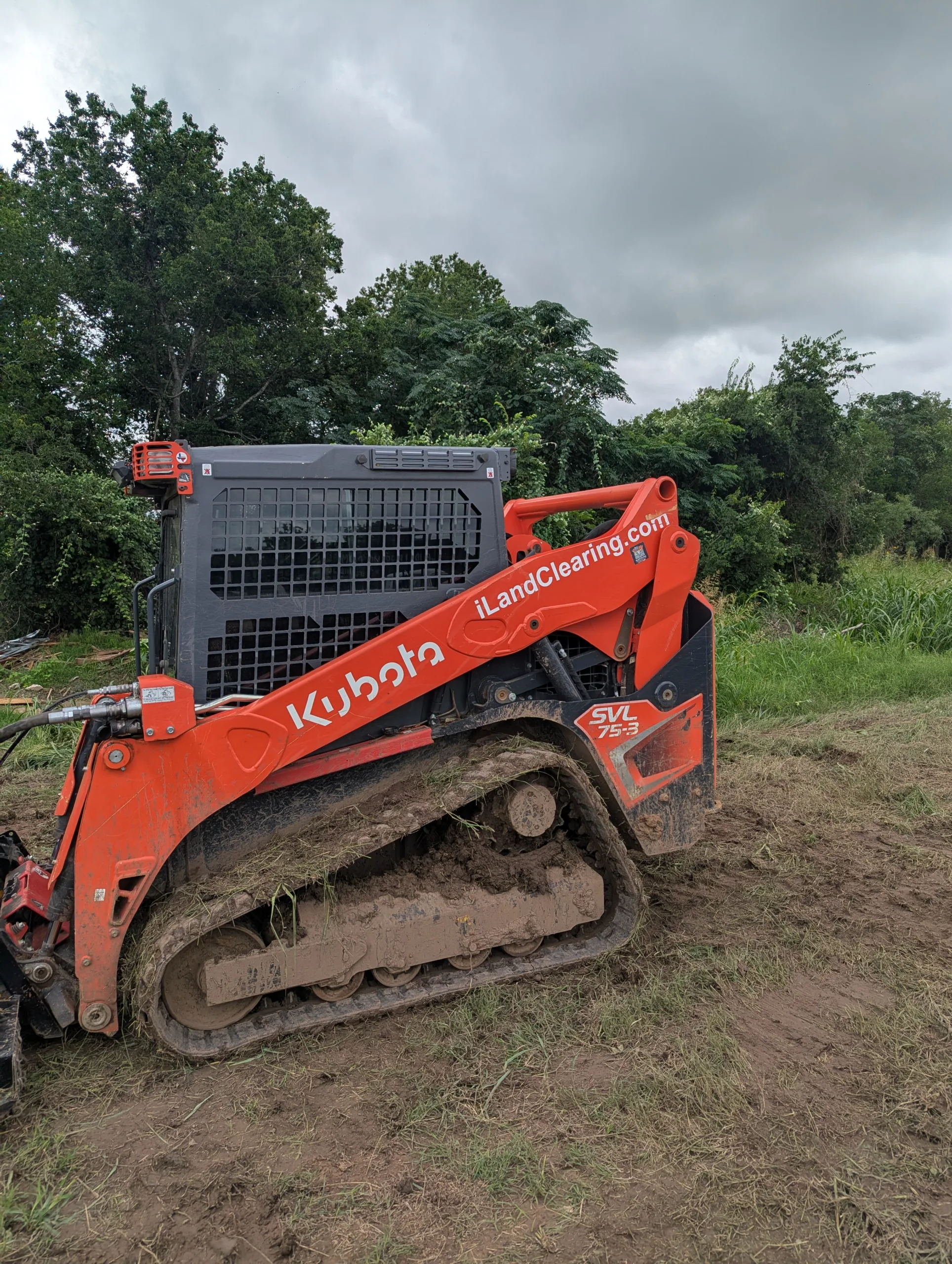
One of the biggest advantages we have over crews relying on hand tools and older machinery is climate-controlled equipment. Our SVL75-3 compact track loader is equipped with a full HVAC system in the cab — meaning our operator is working in a climate-controlled environment even when it’s 105°F outside.
That matters more than people realize. An operator who isn’t fighting heat exhaustion inside a hot cab all day:
- Stays sharper and more alert on controls, which matters when you’re operating near property lines, structures, or other crew members
- Can safely put in a full, productive workday instead of needing to stop early
- Faces a dramatically lower risk of heat-related illness than someone doing the same physical work without climate control
In practice, this means we can keep projects on schedule through the hottest stretch of a Texas summer, when a lot of outdoor work in our industry slows to a crawl.
How We Keep Ground Crews Safe Too
Not every task can be done from an air-conditioned cab. When crew members are working on the ground — chainsaw work, brush clearing, equipment support — we follow a few core practices:
- Start early. Whenever possible, the most physically demanding tasks happen in the morning before peak heat sets in.
- Acclimatization matters. New crew members or anyone returning after time off ease into full workloads over the first week or two rather than jumping straight into a full day in the heat.
- Sun protection is standard gear. Hats, sunscreen, and breathable, light-colored clothing are part of the routine, not an afterthought.
- Know the warning signs. Heat cramps, heat exhaustion, and heat stroke are different levels of the same emergency, and our crews are trained to recognize and respond to each one quickly — including stopping work and cooling down immediately if anyone shows symptoms.
- Someone is always watching the weather. On the worst heat-advisory days, we adjust schedules rather than pushing through conditions that aren’t safe.
Bottom Line
Texas heat isn’t going anywhere, and land that needs clearing doesn’t wait for cooler weather. What makes the difference is having the right equipment, the right routines, and a crew that takes hydration and heat safety seriously every single day. That’s how iLandClearing keeps delivering results across Central and West Texas all summer long — without compromising on the safety of the people doing the work.
Need land cleared this summer? Contact iLandClearing to talk through your project.
