Tamping/Compaction
Loose soil settles — that’s just physics. If a road, pad, or foundation isn’t properly compacted before you build on it, you’ll be dealing with sinking, cracking, and washouts later. We tamp and compact base material properly the first time, so what you build on it actually stays put.
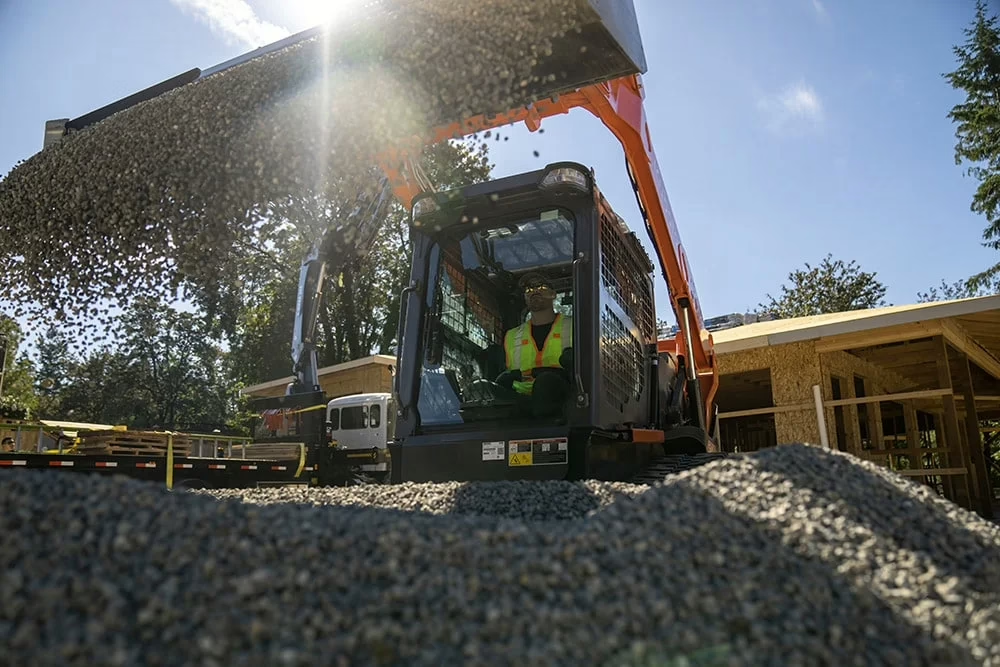
The Step That Protects Everything Built on Top
Proper compaction protects the value of whatever’s built on top of it — a foundation, a driveway, a pad — by preventing the settling and shifting that cracks concrete and buckles roads. It’s a lot cheaper to compact correctly up front than to repair a sunken driveway or a cracked slab later. And a stable, properly compacted surface is simply safer and more pleasant to use, whether it’s a road you drive on daily or a pad your new barn sits on.
How Tamping & Compaction Works
- Check the base — Soil type and moisture checked to determine the right compaction approach.
- Place material in lifts — Base material spread in controlled layers rather than one deep fill.
- Compact each lift — Each layer tamped before the next is added, so compaction is even throughout.
- Spot-check density — Soft spots identified and corrected before moving on.
- Final compaction pass — Surface finished stable and ready to build, pave, or drive on.
What We Handle
- Compaction ahead of roads and driveways
- Base prep for building pads and foundations
- Tamping around utility trenches and culverts
- Compaction testing and correction on soft spots
- Coordination with grading and base material work
Send us a message and we’ll make sure what you’re building on is ready to hold it.
